
VINELink Coverage in Grainger County
The Grainger County Sheriff's Department homepage carries a VINE badge linking to VINELink site ID 43000. That is the county's official entry point. Tennessee Department of Correction materials describe VINE covering county-jail and state-corrections status, and a TDOC annual report notes deployment through the Tennessee Sheriffs' Association in county jails across the state. Participation can shift, so test the live interface.
VINE and DCN serve different jobs. DCN is Grainger's public roster of charges. VINE reports custody status and sends the notifications an agency supports. Timing, spelling, release, transfer, protection, or sync gaps cause mismatches.
Tennessee VINE also handles TDOC records, yet it does not replace FOIL. FOIL posts state felony-offender profiles. A profile may include a photo, status, location, offense, sentence, parole, or release detail. VINE handles alerts instead. Someone just booked in Grainger County may hold no TDOC record yet.
Check a Grainger Arrest on VINELink
Start at the Grainger-linked VINELink route or the VINELink home page. Pick Tennessee and the jurisdiction when prompted. Search the legal name exactly as booked. Add an offender or booking identifier where the interface allows it, and compare any multiple matches against details the jail has already confirmed.
- Enter VINELink through the county-linked or statewide official page.
- Select Tennessee and the appropriate custody jurisdiction.
- Search the full legal name or available offender identifier.
- Open the matching record and read its reported custody status.
- Record the name or offender number before registering for alerts.
- Call the Grainger jail when a fresh or safety-critical status needs confirmation.
A name search can miss for many reasons: punctuation, spelling, fresh intake, release, transfer, protected details, or a record sitting in another system. Try another spelling only when real facts support it. Never lean on demographics to guess identity. Check admission date, agency, and identifier from DCN. The official VINELink search interface displays the fields behind each lookup.
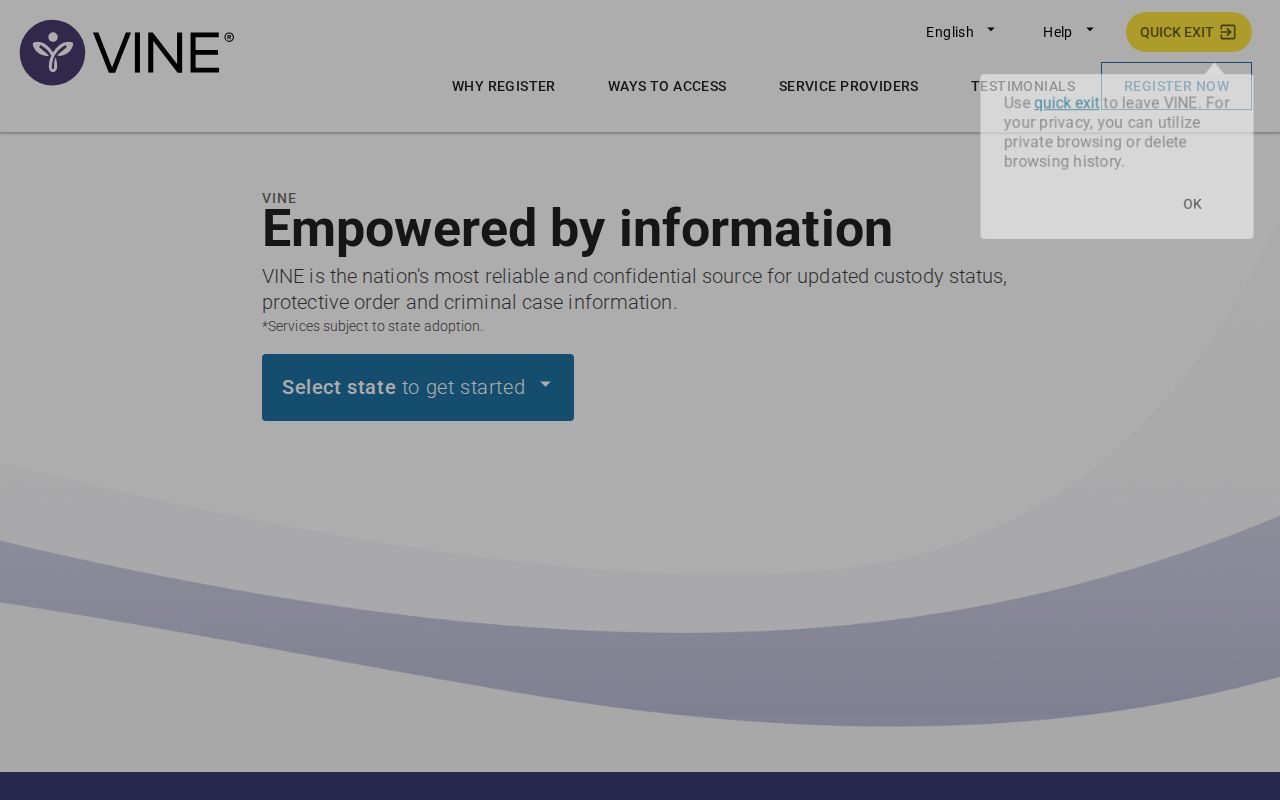
The search screen opens the door; the detention facility still gives the firmest word on who is in custody.
What Grainger VINELink Shows
Fields vary by agency and record. VINE reports custody status plus identifying details the agency supplies. An offender number may appear. So might a custody location or supported event data, though none of it amounts to a full case history.
| Result element | What it can answer | What it cannot prove |
|---|---|---|
| Name or offender ID | Which supplied record was matched | Identity without comparison |
| Custody status | Status last reported to VINE | Minute-by-minute physical location |
| Facility or agency | Reported custodian or location | Complete transfer history |
| Status event | Supported release or transfer update | Court disposition or guilt |
| Notification option | Whether registration is offered | A guarantee every alert arrives instantly |
VINE is not warrant clearance. It will not confirm a bond payment or replace the clerk's docket. It also skips some booking photos. A release alert simply means the data source reported a supported event, leaving the original arrest record intact.
Register for Grainger Custody Alerts
Once the right person is found, tap the current “Get Notified” control or its equivalent. Tennessee offers phone, email, text, and TTY options. Give only the contact the chosen channel needs. Create a four-digit PIN for phone notices and store it with the offender's name or number somewhere secure.
- Confirm that the result belongs to the intended person.
- Select the notification or registration control.
- Choose phone, email, text, or another available channel.
- Enter the requested contact and create the four-digit PIN.
- Complete any confirmation step shown by the service.
- Update the contact information if the number or email changes.
Alerts may cover release, transfer, escape, or other events. What is offered varies by record and jurisdiction. Registration is free, and Tennessee materials describe anonymous status checks. Never treat an automated alert as your only safety measure; the official VINELink notification route page shows the sign-up steps.
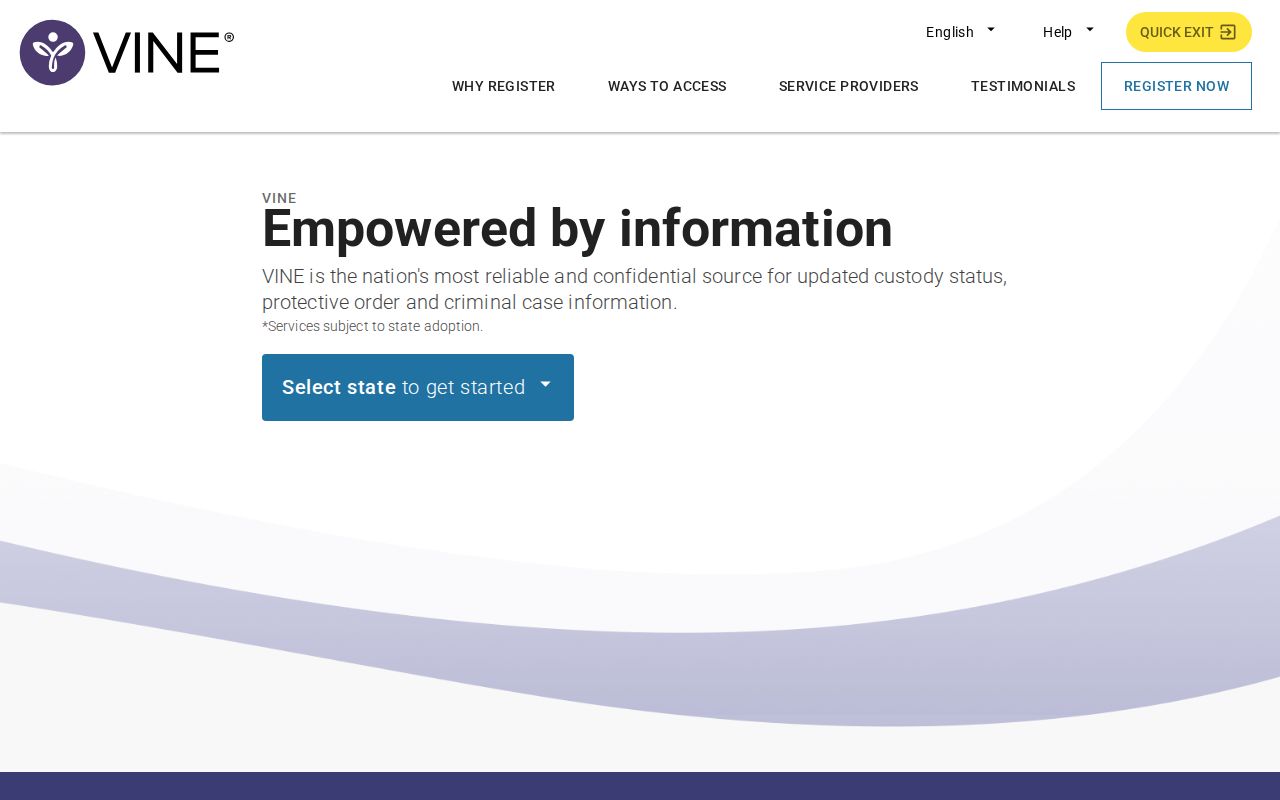
The registration step connects a confirmed custody result with the available notification channels.
Grainger VINE Phone and PIN
Tennessee lists the VINE line at 1-888-868-4631 and TTY at 1-866-847-1298. Calling works well without web access. Follow the prompts with a name or identifier. Keep the four-digit PIN close. Guard it. Do not publish the number or share it casually.
Automated calls may repeat until acknowledged under the service's current behavior. Vendors and prompts change, so check the live instructions when registering. A missed call, blocked number, full inbox, spam filter, or stale contact can swallow a notice. Good registration includes keeping contact details current.
If an alert conflicts with the roster, call the Grainger County Detention Facility at 865-828-3613. Court dates and case outcomes belong to the clerk, and VINE staff cannot set bond, alter a warrant, fix a judgment, or give legal advice.
Fresh Grainger Bookings Can Lag
A person just arrested may be missing while booking and data entry run their course. Grainger posts no set roster cadence or sync interval. Admit Date and Admit Time mark intake only. Check the official roster first. Then use the Grainger County 24 Hour Arrests method and call the detention facility.
Release works the other way too. A person can drop off the roster while a VINE event is still processing. A transfer may place him under another county, TDOC, federal, or immigration authority. A mismatch is a cue to find the custodian, not a reason to guess. Note when each system was checked.
Never lean on VINELink alone for safety; confirm urgent custody and keep an independent safety plan in place.
Federal Custody Is Separate
VINE stops at the state line. Federal custody works differently. The Federal Bureau of Prisons locator tracks federal inmates from 1982 to the present, searchable by name or register number. It is not a county booking feed. It offers no public mugshot gallery either. A federal defendant can also sit in U.S. Marshals custody long before any BOP entry appears, so a gap there means little.
ICE runs its own Online Detainee Locator for people in ICE or qualifying CBP custody. Search by A-number or by basic biographical details. Minors cannot be searched through it. An ICE detainer can change where a Grainger County arrestee ends up, though missing from ICE does not mean the person was never arrested in Grainger. The Marshals Service keeps no general public locator and releases no prisoner photographs. For federal status, find the responsible agency, then use its own locator or the court record rather than trusting a county hold label.
VINELink Is Not a Court Result
A VINELink result is booking information, nothing more. The Grainger DCN detail may list charge, bond, court type, and a court date. All of that stays at the booking layer. Double-check the county docket page. Call the Circuit Court Clerk at 865-828-3605 when the file is unclear. The real answers live in Circuit Court or General Sessions records.
Charges get reduced, dismissed, diverted, tried, or resolved by plea. A release or transfer alert never says which way a case ended. Keep the booking identifier handy. Match it against the court file before drawing any conclusion.
Public Record Search
Sponsored Results